_edited.png)
The Lost Value of Intergenerational Friendships


20. 78. 51. 28.
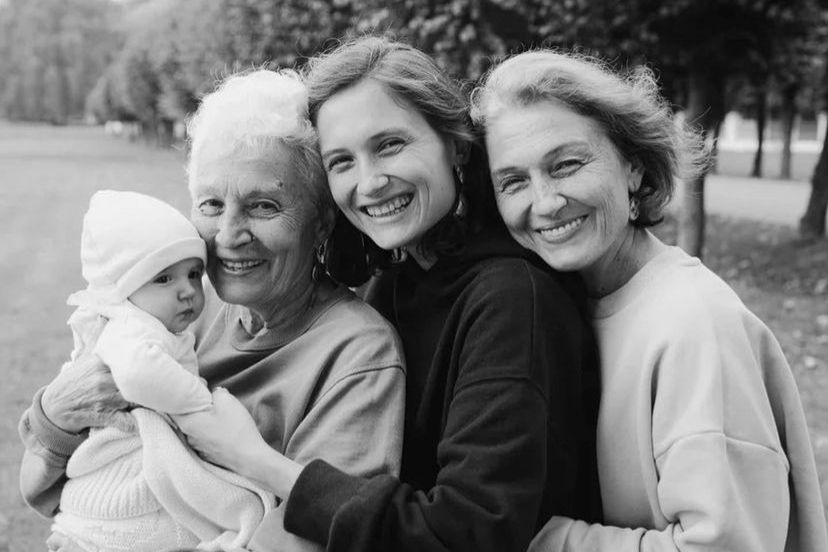
These are just a few examples of the ages of the women who I invited to share my twentieth birthday with me. Despite, and perhaps because of, the large age range of the guests, it was one of the most enjoyable birthday celebrations I’ve ever had. It was an occasion that demonstrated tangibly the value of intergenerational friendships, which has been somewhat forgotten in today’s society.
In previous ages, communities were more tightly knit, and people of all ages and stages would go about their lives together. Oftentimes, several generations of one family would live together in the same house, with parents and grandparents teaching the new generation and the young caring for the elderly. In Christendom, local churches were an integral part of the community, and a place where the oldest to the youngest gathered in fellowship, united by a shared faith. And in parts of the non-Western world, communities still function like this today.

That being said, there are many advantages to living in a globalized society. It has never been easier to travel to another country and gain new perspectives and experiences. Through smartphones and the internet, you can talk to a friend halfway around the world. You can read about events happening all across the globe with just the tap of a few buttons.
But we have also lost something valuable in our postmodern society. Rapid urban and suburban growth has meant that our communities are no longer so tightly knit, and where closer communities do exist, they are often age-segregated, as is the case with high schools, college campuses, and retirement communities. When seeking community in today’s world, we naturally gravitate towards finding people our own age and stage of life. We, of course, need friendships with those who are our own age, but we also need friendships with those in different stages of life.
One reason is that intergenerational friendships can teach us things. Often, we think of this as being older friends teaching younger friends, in a kind of mentor-mentee relationship. Certainly, older friends have wisdom and life experience that they can share with younger friends, though younger friends often have insights that older people, who are more set in their ways of thinking, may miss.

Some of the sweetest friendships I have had over the years have been with younger women. For example, when I worked as a camp counselor, I was the counselor for a group of girls mostly aged sixteen or seventeen. These young women were far from stereotypical angsty teenagers. They were open-minded and curious, asking questions about life that older people are often too proud or too afraid to ask. I came in expecting that they would be learning from me, but I ended up learning from them, too.
Friendships with older women can teach us many valuable things as well, as those who have lived longer have had time to gain wisdom and experience. In previous generations, the wisdom of elders was respected, and older members of a community were valued as a resource for younger members to learn from. Sadly, in the twenty-first century, we have lost much of this respect, and often the elderly are considered at best uncool and embarrassing, and at worst a burden on society.

I am currently in the throes of the sometimes joyful, sometimes terrifying, completely unique-to-our-time world we call dating. And as I’ve tried to navigate this world, the wisdom and advice of older friends who have been in this season before has been invaluable. I’ve certainly made some mistakes in dating, but I know I would have made more had it not been for older friends guiding and advising me. So next time you are tempted to run to your girlfriends to gush over the latest eligible bachelor come to call, consider instead going to an older woman who can offer you mentorship and wisdom.
Similarly, intergenerational friendships expose us to different perspectives. Every generation has their own unique experiences which shape their perspectives and worldviews, and hearing those perspectives can help us to become more open-minded, empathetic, and well-rounded people. A sixteen-year-old has not experienced the uncertainty and fear of living through the Cold War, and a sixty-year-old has not experienced the struggle of growing up in the age of smartphones. But a friendship between the two, where they listen to one another and try to understand their perspectives, can help them to develop empathy and open-mindedness in relating to others.
I remember one Sunday close to Christmas when the two nursery workers on duty were myself, aged twenty at the time, and an eighty-seven-year-old lady who immigrated to the United States from Germany. I sat captivated on the nursery floor while this elderly lady told me stories of what Christmas had been like when she was a small child during the Nazi regime. Her family sat by the Christmas tree, singing and playing music together. In the days before TV, that was their entertainment. She remembered those evenings as a little girl, unaware that history was being forever altered just outside her door. I feel I gained a lot of perspective that Sunday in the church nursery, hearing from someone who had lived much more life than I had, seen first-hand a time long past, and faced things that I’ve never had to face.
Finally, intergenerational friendships are often the friendships that last. When friendships are based on shared experiences, interests, or stages of life, what happens when your interests or season of life change? Those friendships will fade as well. How many of us can think of childhood friends, high school friends, and college friends who we were once inseparable with but now haven’t heard from in years? In order to build a friendship with someone of a different age and stage than you, you need to build it on a foundation of humility, curiosity, and willingness to listen and to learn. A foundation like this has a better chance of standing the test of time.
Intergenerational friendships are not always easy. Sometimes it takes a lot of work to empathize with a woman who grew up in a completely different time from you, to develop the humility required for this kind of connection and understanding. But the value and reward of these friendships, the knowledge and perspectives gained, is worth the work.
Building friendships with women from different generations challenges the snobbish pride which calls the sixty-year-old old-fashioned and calls the sixteen-year-old a “screenager.” At the end of the day, older people and younger people are all still people. People with lives, hopes, knowledge, and experiences. People who are worth our time and our friendship.


xosoplus.mobi dạo này mình thấy bạn bè nói qua nên ghé thử cho biết, kiểu vào xem giao diện họ làm ra sao thôi. Vừa mở lên là thấy tiêu đề chuyên mục XSMB theo ngày đặt khá rõ, có dòng nhắc đúng “XSMB ngày 19 07 2026” nên mình khỏi phải đoán đang ở kỳ nào. Mình cũng để ý họ trình bày số liệu theo khối nhìn gọn, đặc biệt phần “Đầu lô tô Đuôi lô tô” tách riêng như một bảng nên lướt nhanh vẫn nắm được, không bị chữ số dồn vào một cục. Cuộn xuống chút là thấy mấy cụm thống kê đặt theo nhóm, nhìn khá dễ chịu. Nói chung mình thích kiểu họ…
https://keonhacai5.com/ mình ghé thử cho biết vì thấy bạn bè nói qua, kiểu vào xem giao diện là chính. Ấn tượng đầu là trang chia khối nội dung khá gọn, nhìn lướt không bị ngợp chữ. Mình có đọc ké đúng một bài nhận định Girona vs Athletic Bilbao (03h00 ngày 05/11) thì thấy tiêu đề đặt rõ ràng, kéo xuống là các đoạn ngắn nên đọc nhanh vẫn nắm được ý. Phần kèo/tỉ lệ họ trình bày theo cột nhìn khá “sạch”, không phải zoom hay căng mắt mới hiểu. Mình cũng thích cái menu để ngay chỗ dễ thấy, bấm qua lại giữa bài này với bài khác không bị lạc, nhất là phần tiêu đề và khung…
hitclubvn.co.com mình thấy mấy hôm nay nhiều người nhắc nên tiện tay vào nghía thử cho biết. Không phải kiểu vào để săn ưu đãi hay gì đâu, mình chỉ hay để ý giao diện và cách họ trình bày thông tin có dễ theo dõi không. Cảm giác đầu tiên là trang load khá nhanh, bấm qua lại mấy mục không bị đứng hay lag. Nội dung cũng được chia thành từng khối rõ ràng nên đọc lướt vẫn hiểu họ đang nói phần nào, không bị chữ dồn một cục nhìn mệt. Mình thích kiểu bố cục “thoáng” này, nhìn sạch sẽ và đỡ rối mắt. Nói chung trải nghiệm vài phút thấy ổn, nhất là phần menu…
gavang tv dạo này mình thấy có người nhắc tới khi nói về các nền tảng giải trí trực tuyến nên cũng thử mở vào xem cách họ bố trí giao diện ra sao. Mình không đi sâu vào nội dung hay từng trò cụ thể, mà chủ yếu quan sát cách các chuyên mục được phân chia trên trang và cách thông tin hiển thị cho người dùng. Nhìn tổng thể thì các khu như thể thao, casino, game bài hay slot thường được sắp xếp theo từng nhóm khá rõ, hiển thị dạng khối và danh sách nên lướt qua cũng dễ theo dõi. Các bảng dữ liệu được trình bày dạng cột khá gọn, giúp quan sát…
hitclub com mình lướt thử vài phút vì thấy bạn bè nhắc, kiểu vào xem giao diện ra sao thôi. Cảm giác đầu tiên là trang load nhanh thật, bấm qua lại mấy chỗ mà không bị đứng hay giật nên khá dễ chịu. Mình cũng thích cái cách họ sắp xếp nội dung theo từng cụm, nhìn phát là thấy mấy ý chính nằm ngay đầu trang, không phải kéo dài mới gặp phần quan trọng. Chữ tiếng Việt hiển thị ổn, đọc không bị “dị”, nên tìm thông tin cũng nhanh hơn. Nói chung không có gì cầu kỳ, nhưng dùng thấy gọn gàng và đỡ rối mắt, nhất là mấy khối thông tin được gom lại rõ…