_edited.png)
The Dying Art of Dressing Well

Hamlet’s Question and Its Cultural Ultimatum
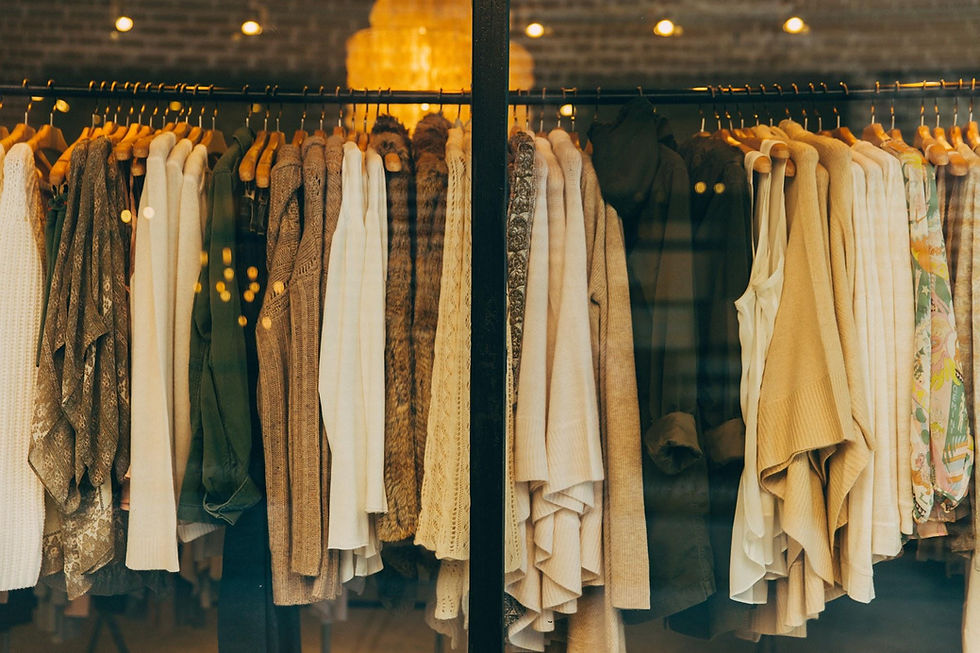
“To be or not to be?” The great question of life and death, made so famous by Shakespeare’s ‘Hamlet’ poses an ultimatum. Two options, one choice. Two destinies, one decision. In lesser forms, life tosses little “to be or not to be” choices at every crossroads. To do or not to do? To care or not to care? To wear or not to wear?
It’s true, what we wear is hardly a life-and-death decision. Many of us wouldn’t think that our clothes decide a cultural trajectory or that our closet decides our mood. A thing like choosing what to wear every day seems a topic of relatively small importance. But perhaps it carries more weight than we give it credit for.
Clothing In Culture
“What is it about wearing a tuxedo or that little black dress, that makes us feel confident, beautiful, splendid, even invincible?” – Vera Nazarian
In current Western culture, casual and athleisure apparel have most definitely won the day. People shop in jersey shorts, eat out in sweatsuits, and attend church services in T-shirts. There is an overarching understanding that comfort and convenience reign supreme, regardless of the environment.
“ To dress well is to dress with care.” |
It is well understood that comfort and convenience most certainly do not equate to carelessness. But to dress well is to dress with care, yet in nearly
every aspect of society, there seems to be a pervasive misunderstanding of what dressing well really means. Children walk into school wearing pajama pants. Adults unapologetically display rips in the seams of their shirt sleeves. Teenagers shuffle in shapeless outfits, defined only by the tragic clashing of colors between their pants and choice of top.
Throughout time, dress has been viewed as a mixture of taste, culture, and practicality. Only recently, however, has there existed such a prominent lack of care, intentionality, and cohesion in our dress standards. The importance of dressing well is an issue that our current culture no longer seems to take seriously, but it is one that affects society in multiple ways.
Clothing As An Expression
What we wear affects much more than many of us are willing to admit. Why is it that we agonize over what to wear on a first date or try and retry certain outfits for a job interview that we really want? We do all of this because we know deep down that long before the first words out of our mouths, our clothing will have the first say.

Every form of writing begins with a thesis statement, a line that describes what the writing is about and gives a clear idea of what to expect in the following material. Compare this with the clothing that we choose for first impressions in work and relationships. A suit signals competence and trustworthiness, something we all want to project in a work environment. When one enters the workplace dressed in a tailored suit, they are presenting themselves as capable even before their work has ever been evaluated. Their presentation is strong, making a clear statement about their deeper values and level of competence.
We choose to dress nicely for a first date, because just like a thesis statement, we know that our outfit will say the first word. We want that word to be a good one and to make a certain statement about us. I am beautiful, I am desirable, etc...
“Clothing functions like thesis statement.” |
Not only does our clothing introduce us, but it also contributes significantly to how we feel. We choose to don a hoodie for a rainy day inside. Why? A hoodie sweatshirt makes us feel cozy, comfortable, relaxed. There is low social obligation related to a hoodie. We choose the tailored trousers for a day at the office not just because it presents well. We also make this conscious choice because the second we put on those pants, our brain recognizes that we are not relaxing at home today.
| What we wear directly impacts our perception of ourselves and our performance in the world. |
With this in mind, a careful observation of Western society’s fashion trends and day-to-day costume habit is not one that speaks highly of our presentation and performance. Instead, the majority of our clothing choices reveal a deeper sense of carelessness, ignorance, and even disrespect. Just as no one feels especially respected by a dinner guest who comes dressed in a crop top and leggings, we disrespect ourselves and others by wearing ill-fitting and solely “convenient” clothing all hours of the day and in all places. Tom Ford rightly said, “Dressing well is a form of good manners.” Just as good manners are timeless, so too should be the art of dressing well.
Clothing As Art
How then do we dress well, if it is indeed an art? Oscar de la Renta said,

“Being well dressed hasn’t much to do with having good clothes. It’s a question of good balance and good common sense.” It is possible to own the grandest closet in the world, fill it to the brim with the most prestigious fashion brands, and still present yourself as careless and thoughtless.
Art does not begin by slapping itself on a canvas and proclaiming itself art. No, instead there is an artist who begins each piece having thought out a plan and carefully delivering on that plan with each brushstroke. In the same way, every outfit has a wearer who has either planned out each item tastefully or threw on the most comfortable option. We can agree that it is a beautiful thing to see a woman wearing an outfit that fits her, is styled according to her own taste, and declares quietly, “I chose this with intention and planned it with care.”
| The clothing is not the biggest factor. Intention is.
The goal in dressing well is not to stand out, but to show respect to others. And the reality is that what we wear makes a statement. Start by making your statement worth something. Add a silk scarf to a plain dress. Learn the best color combinations. Mix clean lines with proper proportions. Get rid of

When we as a society begin to ask thoughtful questions about our clothing, the values we say we hold to will become evident. The beauty, intention, and elegance many of us miss will rise to a higher level of importance. Instead of chaos in our closets, there will be cohesion. Instead of carelessness, we will discover a regard and decency that only benefits a people who choose respect over convenience and mindfulness over negligence.
Our clothing choices should and must represent us well. We cannot allow the ease of comfort to override respect, intentionality, and dignity, for these are the values that accompany a community that cares. They are the principles that transform us into a society that remembers and answers age-old Shakespearean questions of depth and decision. And with every matched outfit, tailored seam, and intentional accessory, society chooses to be and to wear with care.
Now, do you care?
Azaria Carpenter grew up in a lively household of fifteen, where her passion for beauty and creativity was encouraged through literature, music, drama, and photography. Upon graduation from high school, she attended a summer guild in New York where she learned from masters in writing and drama, including writer and director Phil Lollar of Adventures In Odyssey and composer John Campbell. She hails from the beautiful Rocky Mountains of Colorado, and when she’s not at the office, she can most likely be found at a local coffee shop or library, wandering the outdoors with a camera, journaling, or spending time with loved ones. Substack: https://substack.com/@azariacarpenter


Comments