_edited.png)
The Rise of Homogenized Beauty Via Instagram Face


Like every other 13-year-old girl, I struggled with self-image. My celebrity magazines showed me image after image of A-listers who I could aspire to be like, and my schoolmates followed trends that I couldn't afford to keep up with. This is a tale as old as time, a story to which every woman can relate. Girls today compare themselves in the same way I did twenty years ago. Not much has changed when it comes to beauty standards in that they still, unfortunately, exist. What has changed in the last two decades, however, is, firstly, the frequency of exposure. Rather than occasionally flipping through some trashy Hollywood literature, we now have 24/7 self-worth suckers stuck in our pockets.

The second major difference is the type of people against whom we are comparing ourselves. Despite my pre-teen obsessions with whoever the hottest pop star of the 2000s was, deep down I knew it wasn’t possible to truly be like them. Celebrities existed in a fantastical, distant realm, leading lives completely detached from mine.
But today’s youth don't have that boundary.
They face an infinite cast of characters to compare themselves against, because on top of traditional celebrities, they now compete with influencers—normal, everyday people—who are somehow showboating high-end fashion, financial freedom by age 25, and flawlessly organized spaces. When your classmate down the hall can become an online micro-celebrity, the pressure feels personal and inescapable. But comparison within the landscape of social media influencers reaches beyond the psychological depths of fame and stretches towards something far more visible: homogenized beauty.

Back in the 2000s, plastic surgery was an expensive, invasive, permanent, and sometimes risky endeavor, therefore diminishing its now ubiquitous nature. So while many celebrities at the time were undeniably beautiful, each preserved a distinct uniqueness. Some of these traits can be more easily pinpointed—think Owen Wilson’s crooked nose, Tilda Swinton’s pale eyebrows, Joaquin Phoenix’s microform cleft, or Sarah Jessica Parker's strong profile.
This generation’s celebrities were set apart by a total underlying and natural singularity.
Others like Uma Thurman, Joaquin Phoenix, Elijah Wood, and Hilary Swank come to mind. All had their quirks, yet each held firmly to their heartthrob title. It used to be okay to have a bit of flair to your face. Celebrities just couldn't, or didn’t because of the stigma, alter their features to the extreme degree they do today, which secured a variety in what we perceived as attractive.
That variety is what creates true beauty, and yet it’s exactly what’s being totally pulverized by "Instagram Face."
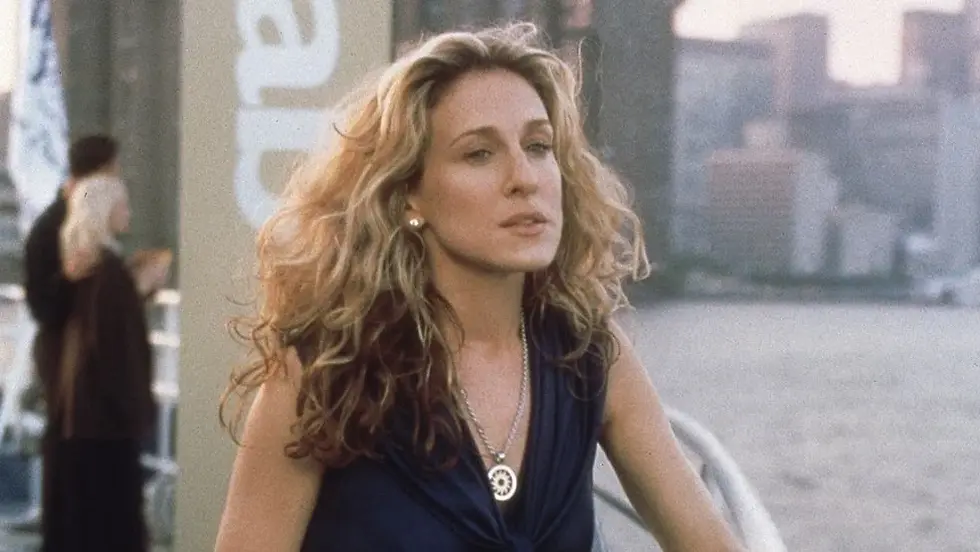
Jia Tolentino, staff writer at The New Yorker was the first to coin the term back in 2019 when she set out to investigate the gradual emergence, among professionally beautiful women, of a single, cyborgian face. Between this sentence from the opening paragraph, several interviews with celebrity makeup artists and plastic surgeons, and even a plastic surgery consultation, Jia leaves the investigation feeling "sad and subdued and self-conscious." She continues by saying:
"I had thought that I was researching this subject at a logical distance: that I could inhabit the point of view of an ideal millennial client, someone who wanted to enhance rather than fix herself, who was ambitious and pragmatic. But I left with a very specific feeling, a kind of bottomless need that I associated with early adolescence, and which I had not experienced in a long time."
Author Grazie Sophia Christie had similar things to say about Instagram Face:
"The folly of Instagram Face is that in pursuing a bionic ideal, it turns cosmetic technology away from not just the reality of class and power, but also the great, poignant, painful human project of trying to reverse time. It misses the point of what we find beautiful: that which is ephemeral, and can’t be reproduced. Our own particularities which, once decayed, can’t be brought to life again."
In short, she says beauty emanates from first, our own particularities and second, the fact that these traits are fleeting. When variance is removed and when certain traits become agelessly attainable, beauty ceases to exist. Perhaps there is still a certain animal magnetism towards the homogeneous caricature of Instagram Face, but this still leaves much to be desired in the department of beauty, which is defined as "the quality or group of qualities in a person or thing that gives pleasure to the senses or the mind." First and foremost, beauty is a quality, which is therefore a distinguishable attribute. Instagram Face has no distinguishable attribute because every woman who leaves the plastic surgeon ends up looking more or less the same—ethnically and relationally ambiguous and void of the holiness of our singular features.

This shift is dangerous because it changes more than just our physical features; it reshapes the psyche. Neuroscience shows that what we find attractive is shaped by what we repeatedly see and learn to value. I’m thankful that in my most formative years, the celebrities I grew up with showed mortal deviations from each other, characteristics that showed their humanity and the ability to emote, rather than this collection of sameness that kids today are subjected to on social media, as well as now in Hollywood. The fact that women are willingly giving up their inherited traits for wealth, status, and vanity goes beyond the exterior problem of self-worth.
Instagram Face is just a visible, measurable way for us to see the core of our society which is succumbing to the overall homogenization of culture. When we look the same, act the same, and think the same, we lose hold of the tethering rope of individuality that grounds us to self-esteem. Aging is a gift. Looking like our foremothers is a blessing. The proof of a life well-lived appears in physical reminders across our faces and bodies. You’re not behind if you don’t have an Instagram Face. You’re right where you’re supposed to be and your body agrees with you.
About the AuthorSummer Zalesky is a freelance writer and editor who leads a monthly lifestyle publication based in Northwest Montana. Drawing inspiration from culture, society, and outdoor pursuit, she crafts compelling narratives across print and digital media. Her work can be found on Substack at Substack.com/@summerzalesky or on Instagram @Summer.Zalesky.


Comments